DNS

Active Directory Automation DNS DNS Security Microsoft PowerShell

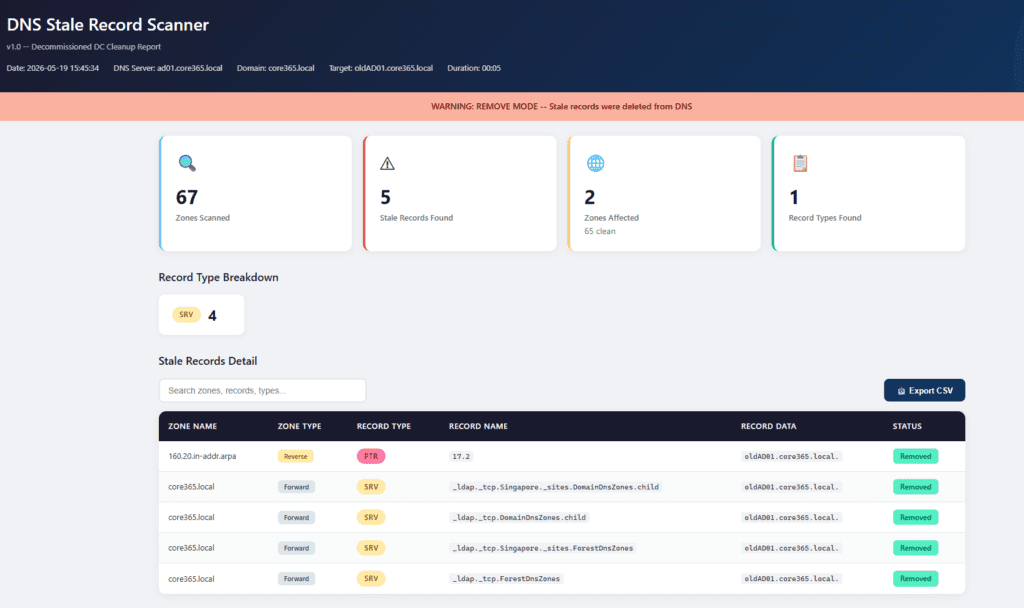
Core365 DNS Stale Record Scanner (PowerShell) – Clean Up Stale AD DNS Records Fast

The Real‑World Problem In real enterprise environments, DNS is never simple. You don’t just have one zone — you have: When a Domain Controller is decommissioned, DNS often keeps stale records behind: Manually checking and cleaning these across dozens (or hundreds) of zones is: The Solution – Core365 DNS Stale Record Scanner Core365-DNS-StaleRecord-Scanner is a […]
Colorful featured image showing the text Active Directory Trust Relationship Failed Root Causes on an orange and pink background.
Active Directory IT Operations Troubleshooting Windows 11 Windows 11 Tips

Active Directory Trust Relationship Failed: Root Causes, Symptoms, and Prevention

Active Directory Trust Relationship Failed: What Are the Root Causes? If you manage Windows endpoints or servers, you have probably seen this error before: The trust relationship between this workstation and the primary domain failed. It is one of those Active Directory issues that appears suddenly. Yesterday the machine worked. Today the user cannot sign

DNS Networking

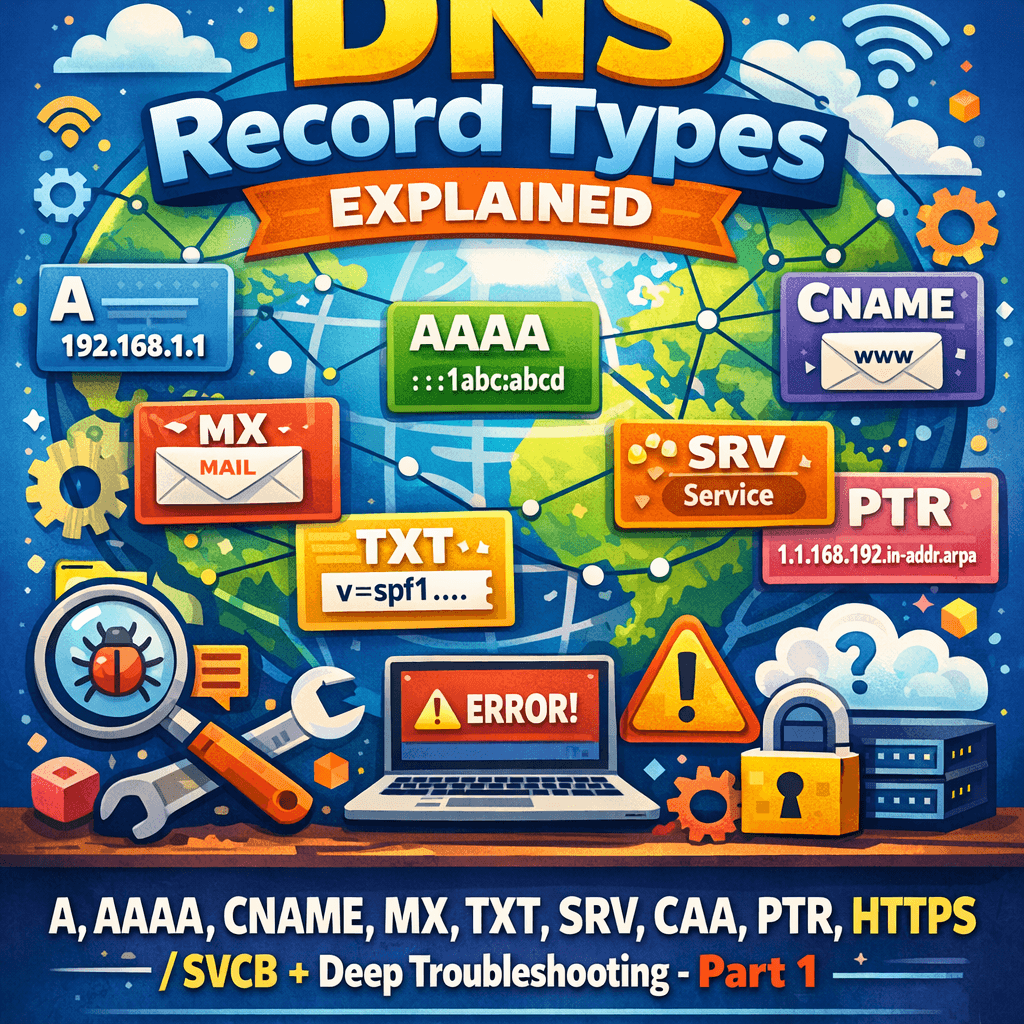
DNS Record Types Explained: A, AAAA, CNAME, MX, TXT, SRV, CAA, PTR, HTTPS/SVCB + Deep Troubleshooting – Part 1

DNS looks deceptively simple—names in, IPs out—but production DNS is a distributed database with caching, delegation boundaries, transport quirks, and cryptographic validation (DNSSEC) layered on top. This guide is written as a “field manual”: what each DNS record type does, when to use it, how to configure it, and what to check when it breaks.

Scroll to Top
×